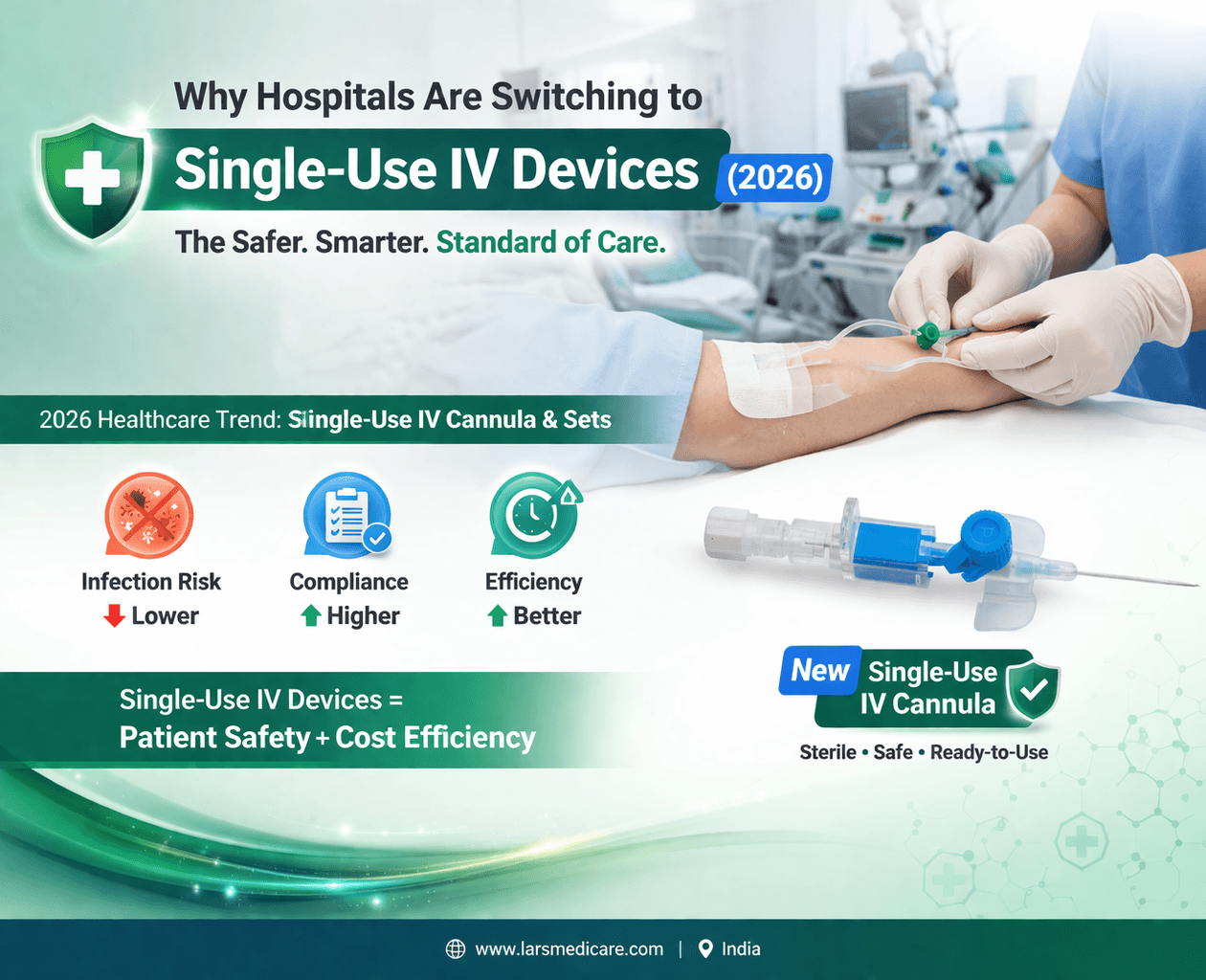
The shift toward single-use IV devices is not a temporary trend; it’s a clear, strategic move driven by safety, efficiency, and evolving healthcare standards. In 2026, hospitals are no longer debating whether to adopt disposable IV solutions. The question has shifted to how quickly they can standardize them across departments.
From infection control protocols to operational efficiency, multiple forces are pushing hospitals toward single-use IV devices. Understanding these drivers helps explain why this transition is accelerating globally.
1. Infection Control Is No Longer Optional, It’s a Priority
The biggest reason behind this shift is simple: infection prevention.
Hospital-acquired infections (HAIs) remain a serious global challenge. Studies show that a significant percentage of hospitalized patients acquire infections during their stay, increasing treatment costs, complications, and mortality risk.
Single-use IV devices eliminate one of the biggest risks, cross-contamination between patients.
Unlike reusable devices, disposable IV cannulas and catheters are:
- Used once
- Sterile at the point of use
- Discarded immediately after
This removes the uncertainty associated with sterilization processes and human error.
Healthcare systems today are under pressure to reduce infection rates, and single-use devices provide a direct, reliable solution.
2. Stricter Regulations and Compliance Standards
Healthcare regulations have become significantly stricter over the past few years.
Authorities and global organizations now emphasize:
- Zero tolerance for cross-contamination
- Standardized infection control protocols
- Mandatory use of sterile, single-use devices in critical procedures
In fact, regulatory guidelines and WHO-backed practices increasingly support single-use devices to ensure patient safety and consistent hygiene standards.
Hospitals are aligning procurement policies accordingly. By 2026, many institutions will actively prefer devices designed to minimize infection risk at the sourcing stage itself.
This shift is not just clinical; it’s regulatory compliance.
3. Reduction in Bloodstream Infections and Complications
IV therapy is one of the most common procedures in hospitals, but it also carries a high risk of bloodstream infections if not managed properly.
Single-use IV devices contribute to:
- Lower infection rates
- Reduced catheter-related complications
- Improved patient outcomes
Modern IV systems, especially single-use and closed systems, are designed to minimize exposure to pathogens and improve safety for both patients and healthcare workers.
Hospitals are seeing measurable improvements when switching to disposable IV systems, including reduced complications and better compliance with infection protocols.
4. Improved Safety for Healthcare Workers
Safety is not just about patients; it’s also about staff.
Needle-stick injuries and exposure to bloodborne pathogens remain a serious occupational hazard in healthcare.
Single-use IV devices, especially safety IV cannulas, are designed with features like:
- Needle shielding or retraction
- Blood control mechanisms
- Closed systems to reduce exposure
These innovations significantly reduce the risk of accidental injuries and contamination.
As hospitals become more focused on staff welfare and legal compliance, safety-engineered disposable devices are becoming the standard choice.
5. Elimination of Reprocessing and Sterilization Burden
Reusable devices require:
- Cleaning
- Sterilization
- Inspection
- Repackaging
Each step introduces potential risks, delays, and costs.
Single-use IV devices remove this entire process.
Hospitals benefit from:
- Faster turnaround time
- Reduced dependency on sterilization units
- Lower risk of human error
- Simplified workflow
In high-volume environments like ICUs and emergency departments, this operational efficiency is a major advantage.
6. Time Efficiency and Workflow Optimization
Healthcare systems are under constant pressure to do more with limited resources.
Single-use IV devices simplify clinical workflows by:
- Reducing preparation time
- Eliminating reprocessing delays
- Ensuring ready-to-use availability
Nurses and clinicians can focus more on patient care instead of equipment handling.
Modern hospitals are increasingly choosing solutions that reduce manual steps and improve efficiency, and disposables fit perfectly into this model.
7. Consistency in Performance and Quality
Reusable devices degrade over time. Even with proper sterilization, repeated use can affect performance.
Single-use IV devices offer:
- Consistent quality in every unit
- No wear and tear
- Predictable performance
This consistency improves clinician confidence and reduces variability in procedures.
In critical care, predictability is essential.
8. Cost vs Value: A Shift in Perspective
At first glance, reusable devices may seem more cost-effective. However, hospitals are now evaluating total cost, not just purchase price.
When factoring in:
- Sterilization costs
- Labor costs
- Infection treatment costs
- Legal and compliance risks
Single-use devices often provide better overall value.
Avoiding even a single infection case can offset the cost difference significantly.
This shift from “cost-saving” to “risk-reduction” thinking is driving procurement decisions.
9. Growing Adoption of Closed IV Systems
Another important factor is the rise of closed IV systems.
These systems are designed to:
- Minimize exposure to blood and fluids
- Reduce contamination risk
- Improve safety during drug administration
Single-use IV devices integrate seamlessly into these systems, making them a preferred choice in modern hospitals.
This is particularly important in:
- ICUs
- Oncology units
- Dialysis centers
- High-risk infection environments
10. Post-Pandemic Healthcare Mindset
The COVID-19 pandemic permanently changed how hospitals view infection control.
There is now:
- Higher awareness of contamination risks
- Greater emphasis on hygiene protocols
- Increased investment in disposable medical devices
Hospitals are no longer willing to take unnecessary risks with reusable equipment when safer alternatives exist.
Single-use IV devices align perfectly with this new mindset.
11. Expansion of Outpatient and Home Care
Healthcare delivery is shifting beyond hospitals.
More treatments are now happening in:
- Day-care centers
- Home infusion setups
- Ambulatory care facilities
Single-use IV devices are ideal for these settings because they:
- Require no sterilization
- Are easy to use
- Reduce handling complexity
This trend is further accelerating demand for disposable IV solutions.
12. Innovation in Single-Use IV Technology
Modern single-use IV devices are not basic anymore.
Manufacturers are introducing:
- Blood control IV catheters
- Ergonomic designs for easier insertion
- Advanced polymers for flexibility
- Integrated safety features
Innovation is making single-use devices not just safer, but also more efficient and user-friendly.
Hospitals naturally gravitate toward better-performing solutions.
Final Thoughts
The shift toward single-use IV devices in 2026 is driven by a combination of clinical necessity, regulatory pressure, and operational efficiency.
Hospitals are prioritizing:
- Infection prevention
- Staff safety
- Workflow efficiency
- Consistent performance
Disposable IV cannulas and catheters address all these areas effectively.
What was once considered a cost decision has now become a safety standard.
In modern healthcare, reducing risk is not optional, and single-use IV devices have become a key part of that strategy.