Intravenous access is one of the most routine yet critical procedures in healthcare. While it may appear straightforward, the success of IV therapy depends heavily on choosing the correct IV cannula gauge. A poor choice can lead to vein trauma, delayed treatment, patient discomfort, or repeated insertion attempts. A well-informed choice improves flow efficiency, patient safety, and overall clinical outcomes.
This in-depth guide is written for clinicians, nursing staff, hospital administrators, and procurement professionals who want a clear, authoritative understanding of IV cannula gauge-without vague explanations or surface-level content. The goal is simple: help you make confident, evidence-based decisions in real clinical settings.
Understanding IV Cannula Gauge at a Practical Level
The term IV cannula gauge refers to the internal diameter of the cannula catheter. What often causes confusion is that gauge numbers work in reverse order. A lower gauge number indicates a larger diameter, while a higher gauge number represents a smaller cannula.
This distinction matters because cannula diameter directly affects flow rate, insertion ease, and vein compatibility. In fast-paced environments such as emergency rooms, operating theatres, and intensive care units, selecting the correct gauge is not optional-it is essential.
Clinicians often develop preferences based on experience, but standardized understanding ensures consistency across departments and reduces variability in patient care.
Why IV Cannula Gauge Selection Matters More Than You Think
Choosing the correct IV cannula gauge influences far more than just fluid delivery. It affects patient comfort, risk of complications, and procedural efficiency.
From a clinical perspective, the wrong gauge can result in infiltration, phlebitis, hematoma formation, or repeated insertion attempts. From an operational perspective, it can increase consumable usage, staff time, and patient dissatisfaction.
A properly selected cannula gauge helps achieve:
- Adequate flow rates without unnecessary vein trauma
- Faster initiation of therapy in emergency scenarios
- Improved patient comfort, especially in long-term IV use
- Reduced risk of cannula-related complications
- Better compliance with clinical protocols and safety standards
Understanding gauge selection is a foundational skill that supports both clinical excellence and operational efficiency.
The Relationship Between Gauge Size and Flow Rate
Flow rate is one of the primary reasons gauge selection matters. Larger diameter cannulas allow fluids and blood products to pass more quickly, making them essential in high-volume or time-critical situations.
Smaller gauge cannulas, while limiting flow, are gentler on fragile veins and suitable for slower infusions or medication delivery.
This relationship becomes particularly important in trauma care, surgical preparation, and transfusion scenarios, where time and volume are critical factors.
Rather than defaulting to the largest possible cannula, experienced clinicians balance flow requirements with patient-specific factors such as vein quality, age, and treatment duration.
Standard IV Cannula Sizes Explained in Detail
IV cannula sizes are internationally standardized, making it easier for healthcare teams to communicate and work consistently across facilities. Each size serves a specific purpose and clinical context.
14G and 16G Cannulas
These are large-bore cannulas designed for rapid fluid administration. They are commonly used in trauma, emergency resuscitation, and major surgical procedures. Their size allows high flow rates but requires strong, accessible veins.
18G Cannula
Often considered a versatile option, the 18G cannula supports blood transfusions, contrast injections, and surgical procedures. It balances flow capacity with relative ease of insertion.
20G Cannula
The most commonly used size in general wards. It is suitable for routine IV therapy, antibiotics, analgesics, and maintenance fluids. This size offers good patient comfort while maintaining adequate flow.
22G Cannula
Used for patients with smaller or fragile veins, including elderly and pediatric patients. While flow rates are lower, the reduced vein trauma makes it ideal for delicate venous access.
24G Cannula
Primarily used in neonates, infants, and patients with extremely fragile veins. It supports slow infusions and medication delivery where vein preservation is critical.
Each of these IV cannula sizes exists for a reason. Proper selection reflects clinical judgment, not convenience.
| Gauge | Colour | IN. Ext. (in mm) | Length (in mm) | Water flow (in mm) |
| 14 | Orange | 1.6-2.1 | 45 | 270 |
| 16 | Grey | 1.3-1.7 | 45 | 180 |
| 17 | White | 1.2-1.5 | 45 | 125 |
| 18 | Green | 0.6-0.9 | 45 | 90 |
| 18 | Green | 0.6-0.9 | 33 | 90 |
| 20 | Pink | 0.8-1.1 | 32 | 60 |
| 22 | Blue | 0.6-0.9 | 25 | 36 |
| 24 | Yellow | 0.5-0.7 | 19 | 20 |
| 26 | Violet | 0.4-0.6 | 19 | 13 |
IV Cannula Size and Colour Coding: A Universal Safety System
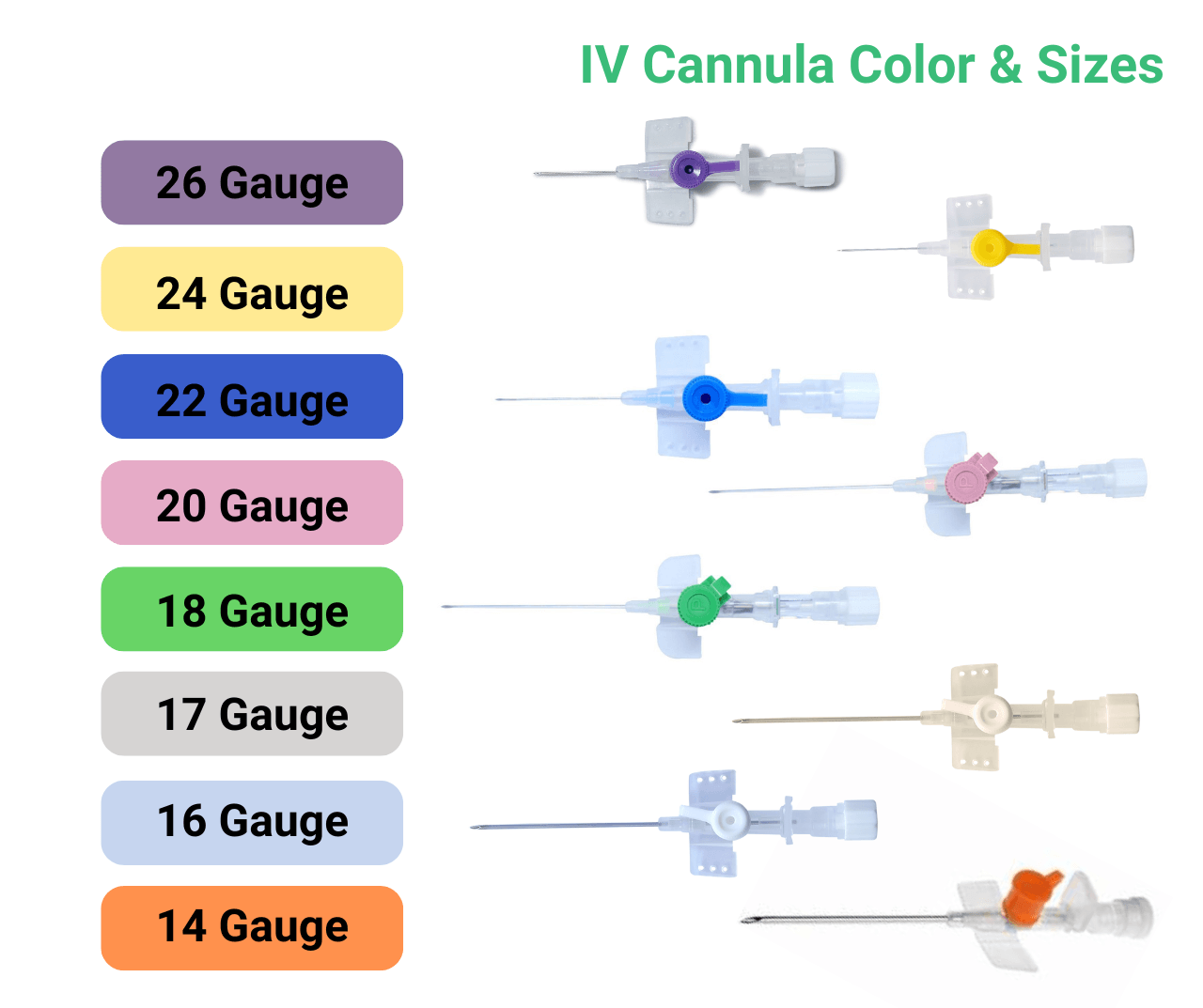
IV cannula size and colour coding provides an immediate visual reference that enhances safety and efficiency. This system reduces the risk of incorrect cannula selection, especially in high-pressure environments.
Each gauge corresponds to a specific color, allowing staff to identify the size instantly without reading packaging or labels. This becomes particularly valuable during emergencies, shift changes, and cross-department collaboration.
Color coding also simplifies inventory management, staff training, and protocol standardization across healthcare facilities. When used correctly, it minimizes errors and speeds up decision-making at the bedside.
Parts of IV Cannula: Understanding the Anatomy
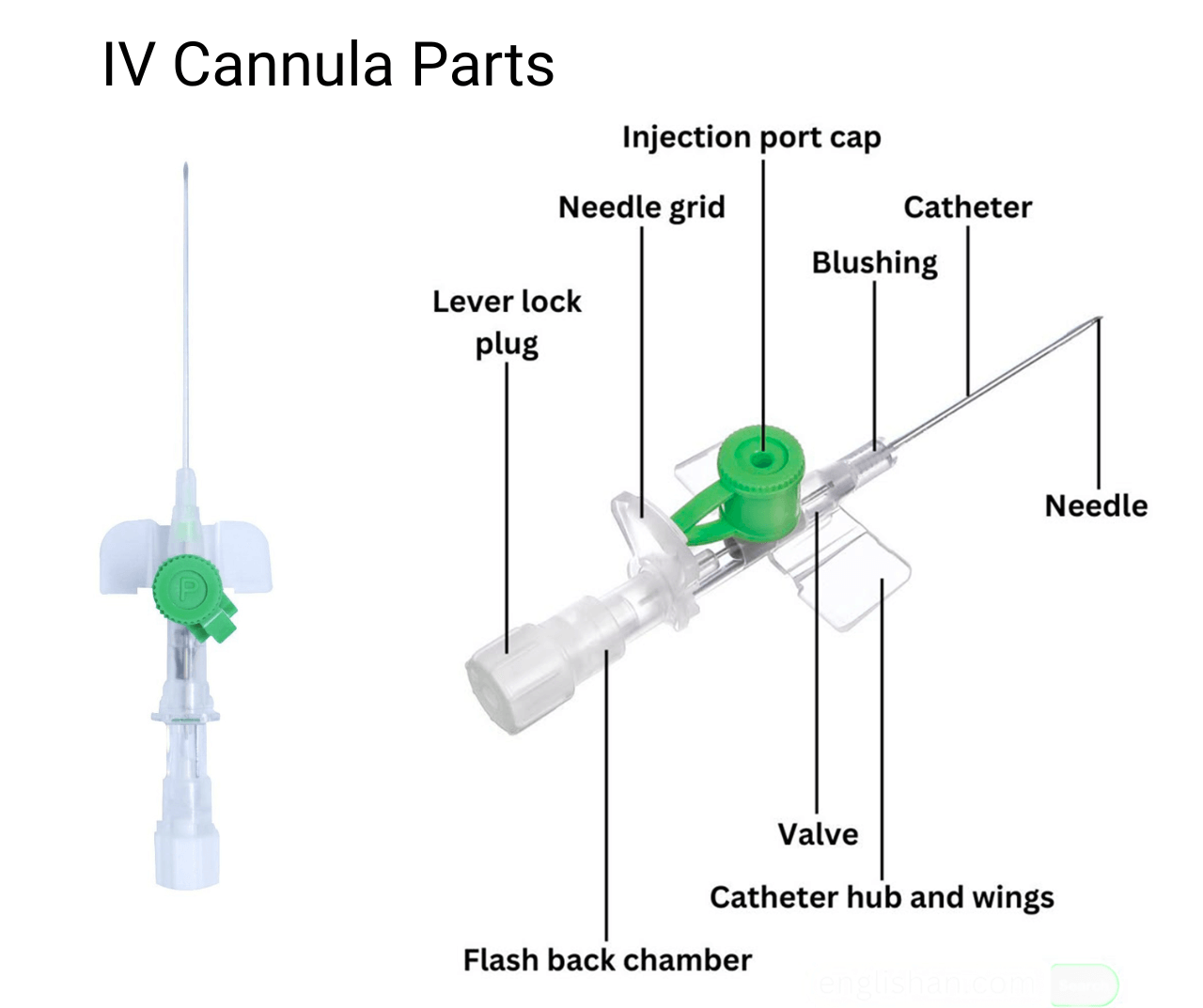
A clear understanding of the parts of IV cannula helps clinicians handle, insert, and maintain IV access more effectively. Each component plays a specific role in safety and functionality.
The catheter is the flexible tube that remains inside the vein. Its material quality determines patient comfort and long-term compatibility.
The introducer needle allows the cannula to penetrate the skin and vein. Precision manufacturing is critical here to reduce insertion pain and vessel damage.
The hub serves as the connection point for IV lines and also indicates gauge size through color coding.
The flashback chamber confirms venous access by showing blood return during insertion.
Additional components such as wings, injection ports, and safety mechanisms vary depending on the cannula design and intended use.
Understanding these components is not just theoretical knowledge. It directly impacts insertion success, infection control, and post-insertion management.
Types of IV Cannula Used in Modern Healthcare
There are several types of IV cannula available today, each designed to address specific clinical needs and safety considerations.
Standard IV Cannula
Used widely in routine care settings. These cannulas are simple, cost-effective, and suitable for short-term IV access.
Safety IV Cannula
Designed with needle protection mechanisms to reduce the risk of needle-stick injuries. These are increasingly preferred in hospitals focused on staff safety and regulatory compliance.
Winged IV Cannula
Provides added stability during insertion and is often used in patients with difficult venous access.
Ported and Non-Ported Cannulas
Ported cannulas allow medication administration without disconnecting IV lines, reducing contamination risk. Non-ported designs are simpler and often used where ports are not required.
Selecting the appropriate type of IV cannula improves workflow efficiency and enhances both patient and staff safety.
Matching IV Cannula Gauge to Clinical Scenarios
Clinical environments vary widely, and IV cannula gauge selection should always reflect the specific situation.
In emergency and trauma care, larger gauges support rapid fluid resuscitation and blood administration.
In surgical settings, gauge choice depends on procedure length, anticipated blood loss, and anesthesia requirements.
In general wards, comfort and vein preservation often take priority over high flow rates.
In pediatric and geriatric care, smaller gauges reduce pain, anxiety, and vein damage.
Experienced clinicians adjust gauge selection dynamically, based on patient condition and treatment goals rather than habit.
Patient Factors That Influence Gauge Selection
Patients are not standardized, and neither should cannula selection be. Several patient-specific factors influence the ideal IV cannula gauge.
Vein visibility and palpability play a major role. Fragile or sclerosed veins require smaller gauges.
Age is another critical factor. Pediatric and elderly patients typically benefit from smaller, more flexible cannulas.
Duration of therapy matters as well. Long-term IV use often requires a balance between flow needs and vein preservation.
Patient anxiety and pain tolerance also influence gauge choice, particularly in outpatient or day-care settings.
Considering these factors leads to better patient experiences and fewer complications.
Common Mistakes in IV Cannula Gauge Selection
Despite clear guidelines, errors in gauge selection are common. One frequent mistake is choosing the largest possible cannula “just in case,” which can unnecessarily traumatize veins.
Another issue is underestimating flow requirements, leading to inadequate infusion rates and delayed treatment.
Inconsistent practices across departments can also create confusion, especially during patient transfers.
Avoiding these mistakes requires education, standard protocols, and regular skill reinforcement.
Infection Control and Cannula Quality Considerations
Gauge selection alone does not guarantee safety. Cannula material quality, sterility, and manufacturing standards play an equally important role.
High-quality cannulas reduce the risk of catheter-related bloodstream infections and mechanical complications.
Smooth catheter surfaces, precision-ground needles, and secure hubs all contribute to safer IV access.
For procurement teams, evaluating IV cannulas based solely on price often leads to higher long-term costs due to complications and replacements.
Training and Standardization Across Healthcare Facilities
Standardized understanding of IV cannula gauge improves outcomes at every level. Training programs that emphasize gauge selection logic, not just technique, empower staff to make better decisions.
Visual aids, color-coding charts, and clear protocols reduce variability and enhance confidence, especially among junior staff.
Facilities that invest in consistent training often see lower complication rates and improved patient satisfaction.
Procurement Perspective: Choosing the Right IV Cannula Range
From a procurement standpoint, offering a complete and consistent range of IV cannula sizes simplifies inventory management and ensures clinical readiness.
Reliable suppliers provide consistent gauge accuracy, durable materials, and clear labeling.
Quality assurance, regulatory compliance, and supply continuity should always guide purchasing decisions.
A well-selected cannula range supports clinicians, protects patients, and reduces operational inefficiencies.
The Long-Term Impact of Correct Gauge Selection
Over time, consistent and informed IV cannula gauge selection leads to measurable improvements in patient care.
Fewer insertion attempts mean less pain and anxiety for patients.
Reduced complication rates, lower treatment costs and hospital stays.
Improved staff confidence enhances workflow efficiency and job satisfaction.
These outcomes reinforce why gauge selection deserves attention at both clinical and administrative levels.
Final Thoughts: Making IV Cannula Gauge a Clinical Strength
IV cannula gauge is not just a technical detail-it is a clinical decision with real consequences. When healthcare professionals understand how gauge, size, color coding, and cannula type interact, they gain control over one of the most common procedures in medicine.
Whether you are inserting cannulas daily or managing procurement for a large facility, a deep understanding of IV cannula gauge supports safer care, better outcomes, and stronger operational performance.
In healthcare, small choices often carry significant weight. Choosing the right IV cannula gauge is one of them.